
Unkept or Unkempt: Which Is Correct?
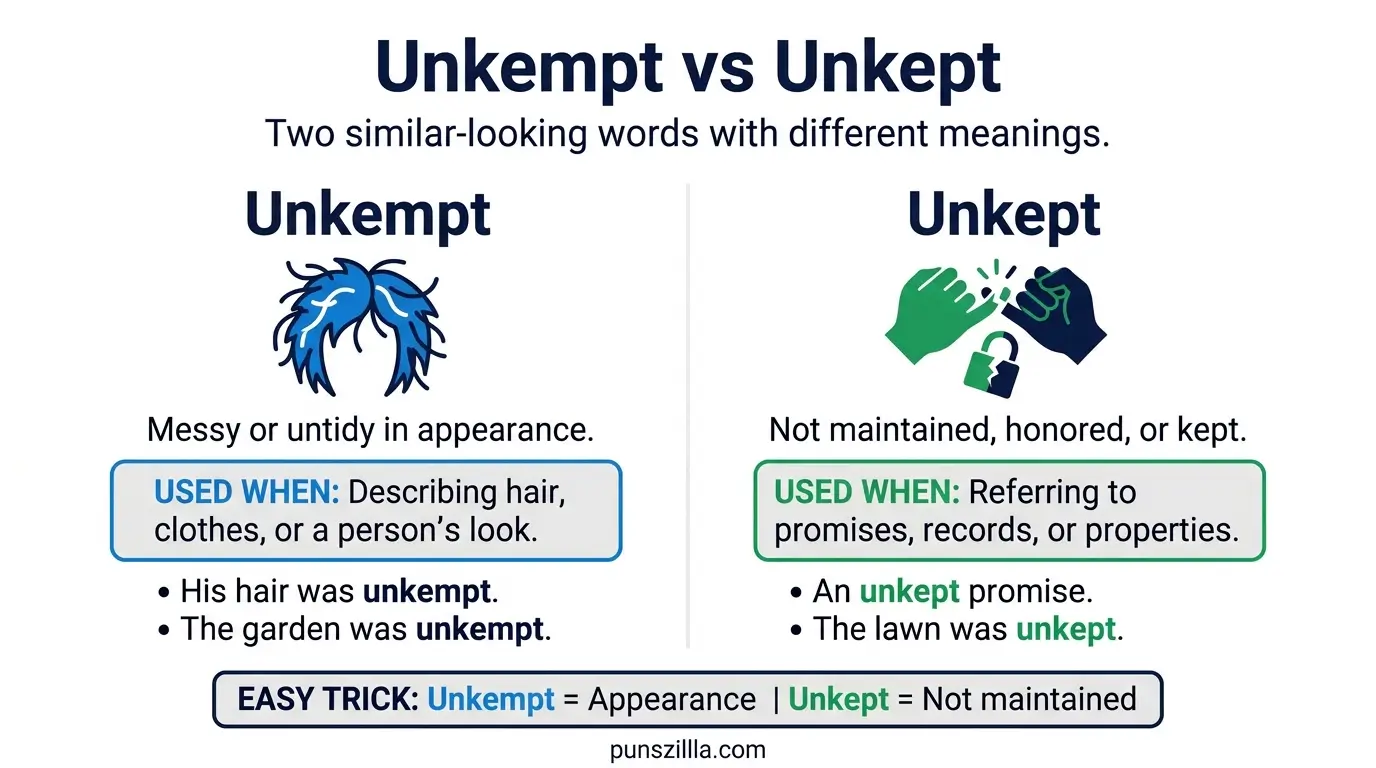
Unkept vs. Unkempt: Both words are correct, but their meanings differ.
Use unkept for promises that are not fulfilled and unkempt for messy hair, untidy appearances, or neglected surroundings.
Have you ever wondered whether to write unkept or unkempt? Both words are correct, but they describe different things. Choosing the right word depends on what you want to say.
Unkept usually means something has not been maintained, fulfilled, or looked after.
It often appears with promises, duties, and neglected places. For example, an unkept promise is a promise that someone has failed to fulfill.
Unkempt describes someone or something that looks messy, untidy, or poorly cared for.
It often refers to hair, clothing, gardens, and personal appearance. For example, unkempt hair looks messy or uncombed.
These words are easy to confuse because they look and sound similar. However, they are not interchangeable in every sentence.
This guide explains the difference between unkept and unkempt with simple definitions, everyday examples, and easy memory tricks. You will also learn which word fits formal writing, school assignments, and professional emails.
By the end, you will know how to choose the right word without second-guessing yourself.
Unkept or Unkempt Quick Answer
Quick Answer: Both unkept and unkempt are correct English words.
Use unkept for something not fulfilled or maintained, such as an unkept promise. Use unkempt for a messy or untidy appearance, such as unkempt hair.
Remember: unkept concerns keeping or fulfilling something, while unkempt usually concerns neatness.
Examples of Unkept
- He made several unkept promises during the campaign.
- The old garden remained unkept for years.
- Her unkept obligations caused problems for the team.
Examples of Unkempt
- He arrived at the meeting with unkempt hair.
- The abandoned house had an unkempt garden.
- She looked tired and unkempt after the long journey.
Simple rule: An unkept promise is not fulfilled. Unkempt hair is not neat.
The Origin of Unkept or Unkempt
Although these words look similar, they come from different word forms. Their histories help explain their meanings.
Where Does Unkept Come From?
Unkept combines the prefix un-, meaning “not,” with kept, the past participle of keep.
The word has been used in English for centuries. It can describe something not maintained, preserved, or carried out.
For example, an unkept promise is a promise that has not been fulfilled. An unkept garden is a garden that has not received proper care.
The meaning depends on the thing being described. The central idea is that something has not been kept as expected.
Where Does Unkempt Come From?
Unkempt comes from an older English form related to combing hair. The prefix un- means “not,” while kempt is an old word meaning combed or neat.
The older verb kemb meant “to comb.” Although kempt is now rare, unkempt remains in everyday English.
Today, unkempt usually describes a messy appearance or something that looks neglected.
For example, unkempt hair is not neatly combed. An unkempt lawn looks untidy or poorly maintained.
For further reading, see the Oxford Learner’s Dictionaries entry for unkempt and the Cambridge Dictionary entry for unkept.
Difference Between Unkept and Unkempt
The main difference is what each word emphasizes. Unkept often relates to promises, responsibilities, or maintenance. Unkempt focuses on a messy or neglected appearance.
1. When to Use Unkept
Use unkept when something has not been fulfilled, observed, or properly maintained.
Common expressions include:
- Unkept promises
- Unkept commitments
- Unkept obligations
- An unkept garden
- An unkept building
Examples:
- The company faced criticism for its unkept promises.
- The property looked neglected and unkept.
- He apologized for his unkept commitment.
Although unkept is correct, other words may sound more natural in some contexts. For example, “broken promises” is a common alternative to “unkept promises.”
2. When to Use Unkempt
Use unkempt when describing something messy, untidy, or poorly groomed.
Common expressions include:
- Unkempt hair
- An unkempt beard
- An unkempt appearance
- An unkempt lawn
- An unkempt garden
Examples:
- His unkempt hair made him look tired.
- The garden became wild and unkempt.
- She noticed his unkempt beard.
Unkempt can describe places as well as people. The key idea is that something looks untidy or has not been cared for properly.
Comparison Table
| Word | Use when | Example sentence |
|---|---|---|
| Unkept | A promise has not been fulfilled | The promise remained unkept. |
| Unkept | Something has not been maintained | The unkept garden needed attention. |
| Unkempt | Hair looks messy | His hair was unkempt. |
| Unkempt | A person’s appearance looks untidy | He arrived looking unkempt. |
| Unkempt | A place looks neglected | We walked past an unkempt lawn. |
Can Unkept and Unkempt Describe Gardens?
Yes, both words can describe neglected gardens, but they emphasize different things.
Unkept garden: A garden that has not been maintained or cared for.
Unkempt garden: A garden that looks messy, overgrown, or untidy.
These meanings overlap. However, unkempt garden is a natural choice when you want readers to picture a messy appearance.
Which Word Should You Use?
Choosing between unkept and unkempt is easier when you focus on the meaning of your sentence.
For US English
Both words are valid in American English. Use unkept for unfulfilled promises or neglected maintenance. Use unkempt for messy hair, clothing, gardens, or appearance.
For example:
- The manager apologized for the unkept promise.
- The visitor arrived with unkempt hair.
For UK and Commonwealth English
The same distinction applies in British English and other Commonwealth varieties.
Both words are understood, but unkempt is the more natural choice when describing a person’s untidy appearance.
For example:
- The report discussed the government’s unkept promises.
- The man looked unkempt after sleeping outdoors.
For IELTS and TOEFL
Use the word that matches your intended meaning. These exams reward accurate vocabulary and clear communication.
For appearance, choose unkempt. For a promise that was not fulfilled, unkept is possible, although broken promise may sound more natural.
Do not use unkempt promise. It does not express the intended meaning.
For Business Emails and Formal Writing
Choose precise wording in professional communication.
- Write “unfulfilled commitments” when discussing commitments that were not completed.
- Write “unkempt appearance” when describing someone’s untidy appearance.
- Write “poorly maintained property” when discussing a neglected building.
These alternatives can sound more natural and professional, depending on the context.
Memory trick: If the problem is a promise, think kept. If the problem is messy hair, think comb and choose unkempt.
Common Mistakes with Unkept or Unkempt
Even experienced English users sometimes mix up these words. The following table shows common errors and how to correct them.
| Wrong | Right | Why |
|---|---|---|
| His hair was unkept. | His hair was unkempt. | Unkempt is the natural word for messy hair. |
| She made an unkempt promise. | She made an unkept promise. | Unkept relates to a promise that was not fulfilled. |
| He looked unkept and untidy. | He looked unkempt and untidy. | Unkempt describes a messy appearance. |
| The promise was unkempt. | The promise was unkept. | A promise can be unkept, not unkempt. |
| The garden was unkempt because nobody maintained it. | The garden was unkempt because nobody maintained it. | This sentence is correct. Unkempt describes its untidy condition. |
| The building looked unkept and messy. | The building looked unkempt and messy. | Unkempt emphasizes its neglected appearance. |
Notice that some mistakes involve choosing the wrong word, while others are already correct. The best choice depends on the intended meaning.
Mistake 1: Using Unkept for Hair
People sometimes write “unkept hair” because unkept sounds like “not kept neat.”
However, unkempt hair is the standard, natural expression.
Mistake 2: Using Unkempt for Promises
A promise cannot usually be described as unkempt. A promise can be unkept because someone failed to fulfill it.
You can also write “broken promise” or “unfulfilled promise.”
Mistake 3: Assuming Unkept Is Incorrect
Unkept is a real English word. It is not simply a misspelling of unkempt.
Cambridge Dictionary recognizes unkept in expressions involving promises and neglected places.
Mistake 4: Treating Both Words as Synonyms
The words sometimes overlap when describing neglected places. However, they are not interchangeable in every situation.
Choose the word that clearly expresses your intended meaning.
Unkept or Unkempt in Everyday Examples
Real-life examples make the difference easier to remember. Here are examples from common writing situations.
| Context | Example |
|---|---|
| Please explain why the earlier commitments remain unkept. | |
| The visitor arrived looking unkempt after a long journey. | |
| News headline | Residents Question Unkept Promises About Local Improvements |
| News headline | Neglected Park Draws Attention for Its Unkempt Appearance |
| Social media | Politicians should be held accountable for their unkept promises. |
| Social media | My hair looks completely unkempt after this windy day! |
| Formal writing | The organization faced criticism for its unkept commitments. |
| Formal writing | The inspection report noted the property’s unkempt grounds. |
Examples for Students
Students can use both words in essays, stories, and vocabulary exercises.
Unkept: The leader lost public trust after making several unkept promises.
Unkempt: The character entered the room with an unkempt beard and wrinkled clothes.
Examples for Everyday Conversation
These words also work in casual conversation.
Unkept: “He never fulfilled his promise, so it remained unkept.”
Unkempt: “Your hair looks unkempt. Do you want a comb?”
In everyday speech, people may choose simpler alternatives such as “broken promise,” “messy hair,” or “untidy garden.” These are often easier to understand.
Unkept or Unkempt Google Trends & Usage Data
People search for unkept or unkempt because the words look similar and have related ideas.
Both can involve something that has not been kept as expected, but their usual applications differ.
Without checking live search data, it would be misleading to claim exact popularity levels or identify a leading country.
The following guidance reflects dictionary usage rather than measured search interest.
Which Word Is More Common?
Unkempt is a familiar choice for describing messy hair, an untidy appearance, or neglected grounds.
It appears in descriptive writing, news reports, and everyday discussions.
Unkept is also correct, particularly in expressions such as “unkept promises.” However, writers often choose alternatives such as “broken promises” or “unfulfilled commitments.”
Regional and Contextual Usage
There is no major US-versus-UK spelling distinction here. Both words are used in American and British English.
| Word | More common in | Where you see it |
|---|---|---|
| Unkept | Contexts involving promises or maintenance | Formal writing, discussions of commitments, descriptions of neglected places |
| Unkempt | Descriptions of untidy appearance | News articles, descriptive writing, everyday speech, and social media |
These are general usage observations, not rankings based on measured search volume. Actual search interest may vary by country and context.
Check It Yourself:
- Open Google Trends and compare “unkept” with “unkempt.” Select your country or worldwide results.
- Adjust the date range and search type. Compare interest over time and by region, remembering that Trends reports relative interest rather than absolute search counts.
- Visit Google Books Ngram Viewer and compare both words in published books. This can help show historical patterns in book usage, not current web searches.
Comparison Table
Use this table as a quick reference whenever you are unsure which word fits your sentence.
| Word | Type/Meaning | Region (or Status) | Example | Formality | Memory trick |
|---|---|---|---|---|---|
| Unkept | Not fulfilled or maintained | Correct in US and UK English | The promise remained unkept. | Neutral | A promise was not kept. |
| Unkempt | Messy or untidy | Correct in US and UK English | He had unkempt hair. | Neutral to formal | Think of uncombed hair. |
The easiest way to remember the distinction is to connect each word with its typical use. Think of promises and commitments for unkept. Think of messy hair and untidy appearances for unkempt.
FAQs
Is unkept a real word?
Yes, unkept is a real English word. It describes something that has not been fulfilled, observed, or maintained. Common examples include unkept promises and unkept gardens. It is not simply an incorrect spelling of unkempt.
Is unkempt a real word?
Yes, unkempt is a standard English adjective. It describes someone or something that looks messy, untidy, or neglected. People commonly use it for hair, beards, clothing, gardens, and general appearance.
What is the difference between unkept and unkempt?
Unkept usually refers to something not fulfilled or maintained. Unkempt usually describes a messy appearance or neglected condition. For example, an unkept promise was not fulfilled, while unkempt hair looks untidy.
Should I write unkept hair or unkempt hair?
Write unkempt hair. This is the standard expression for hair that looks messy or has not been combed neatly. Although readers may understand “unkept hair,” unkempt hair is the more natural choice.
Can I use unkept for a promise?
Yes, you can describe a promise as unkept when someone fails to fulfill it. However, “broken promise” and “unfulfilled promise” are also natural expressions. Choose the wording that best fits your sentence and tone.
Is unkempt formal or informal?
Unkempt works in both formal and informal writing. You can use it in an essay, news report, story, or everyday conversation. In professional writing, more specific phrases such as “poorly maintained” may sometimes be preferable.
Are unkept and unkempt interchangeable?
No, they are not generally interchangeable. An unkept promise is a promise that was not fulfilled, while an unkempt person looks untidy. The words can overlap when describing neglected places, but their meanings differ in other contexts.
Conclusion
Key Takeaways:
- Unkept describes something that has not been fulfilled or maintained.
- Unkempt describes something messy, untidy, or poorly cared for.
- Both words are correct in American and British English.
- Remember: unkept promises, but unkempt hair.
Choosing between unkept and unkempt becomes simple once you understand their meanings. Although the words look similar, they serve different purposes in English.
Use unkept when discussing promises, commitments, or things that have not been properly maintained. For example, an unkept promise means someone did not do what they promised.
Use unkempt when describing messy hair, an untidy appearance, or neglected surroundings. For example, an unkempt garden may have overgrown grass and untidy plants.
If you are writing an essay, email, or professional report, always consider the context. You can also choose clearer alternatives, such as “broken promise” or “messy hair,” when they communicate your meaning better.
The most important lesson is that neither word is automatically wrong. Both are correct, but the right choice depends on your message.
Remember this simple rule: A promise can be unkept, but hair is usually unkempt. Keep this distinction in mind, and you will use both words more confidently.