
Vise or Vice: What’s the Difference and Which Spelling Is Correct?
Vise or vice? These two words sound the same, but they have different meanings. That is why many people confuse them.
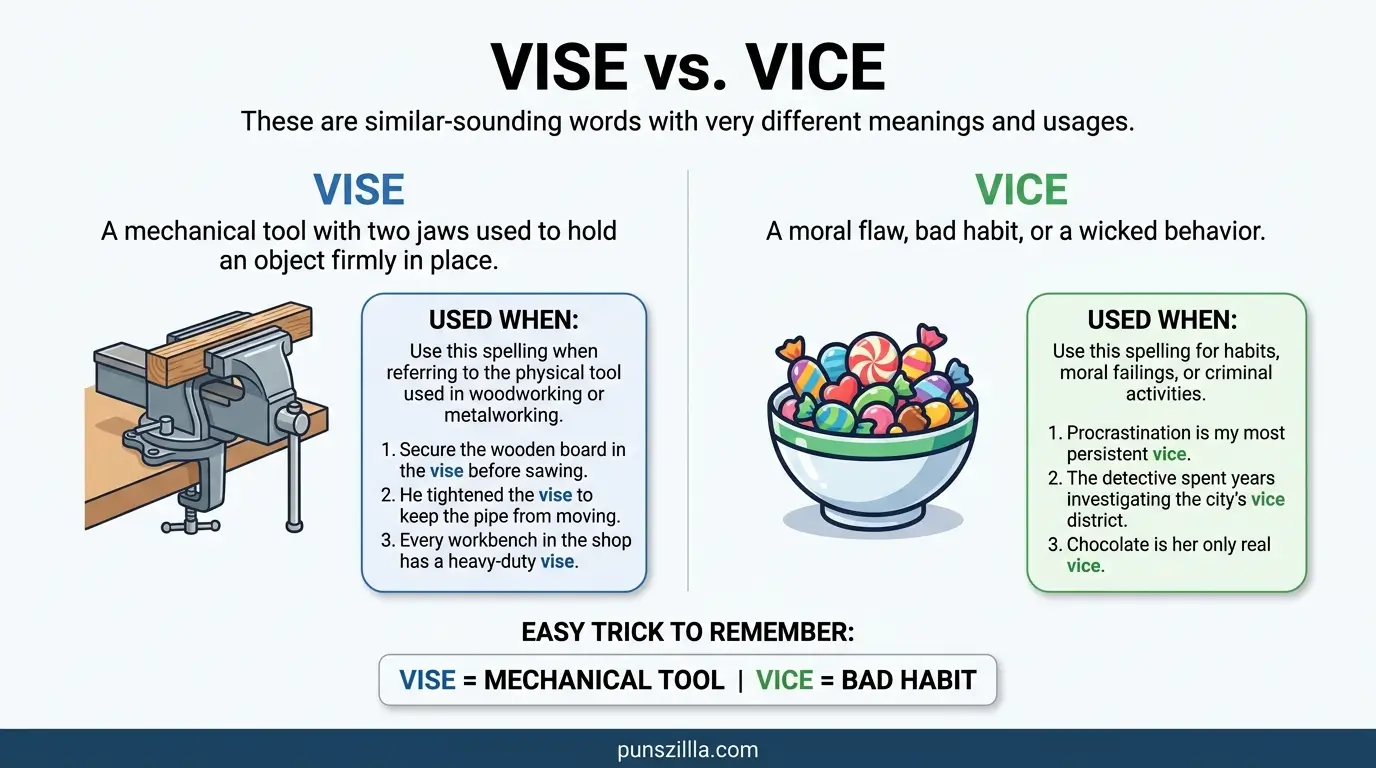
One word can mean a tool that holds something tightly. The other can mean a bad habit or an immoral act. The spelling can also change depending on whether you use British or American English.
For example, an American may write, “Put the wood in the vise.” A British writer may write, “Put the wood in the vice.”
But vice can also mean a bad habit, such as gambling or lying. This makes the question even more confusing.
If you are writing an email, article, school paper, social media post, or formal document, choosing the right spelling matters.
A small spelling mistake can change the meaning of your sentence.This guide explains the difference between vise and vice, where the words come from, how British and American English use them, and which spelling you should choose.
You will also find simple examples, common mistakes, FAQs, and useful writing advice.
Vise or Vice Quick Answer
The correct word depends on meaning and location.
- Vise is mainly American English for a tool that holds an object tightly.
- Vice is British English for the same tool.
- Vice also means a bad habit or immoral behavior in both British and American English.
Examples
- American English: He placed the metal pipe in a vise.
- British English: He placed the metal pipe in a vice.
- Gambling can become a harmful vice.
- Smoking was once considered a common vice.
So, if you mean a tool, use vise in American English and vice in British English. If you mean a bad habit, always use vice.
The Origin of Vise or Vice
The words vise and vice have a long history. They are connected through the idea of something that holds, controls, or affects another thing.
The word vice, meaning a bad habit or immoral behavior, comes from Latin vitium, meaning “fault,” “defect,” or “wrongdoing.” Over time, it entered English and became the word vice.
The word for a gripping tool also developed from an older word related to holding or tightening. In British English, the spelling vice became common for the tool.
American English later adopted vise as the preferred spelling for the mechanical tool. This helped separate the tool from vice, meaning bad behavior.
Today, the spelling difference is simple:
- Vise = gripping tool in American English.
- Vice = gripping tool in British English.
- Vice = bad habit or immoral behavior everywhere.
The words sound the same, but context tells the reader which meaning you intend.
British English vs American English Spelling
British and American English often use different spellings for the same word. Vise or vice is one example.
| Meaning | American English | British English |
| Tool used to hold objects | Vise | Vice |
| Bad habit | Vice | Vice |
| Immoral behavior | Vice | Vice |
| Criminal activity | Vice | Vice |
Example Sentences
American English:
The mechanic tightened the part in a vise.
British English:
The mechanic tightened the part in a vice.
Both:
He decided to give up his harmful vice.
The main spelling difference only appears when you are talking about the tool.
Vise or Vice Comparison Table
Here is a quick side-by-side comparison.
| Word | Main Meaning | Common Use |
| Vise | A tool that grips and holds objects | American English |
| Vice | A tool that grips and holds objects | British English |
| Vice | A bad habit | Both |
| Vice | Immoral or criminal behavior | Both |
Easy Rule to Remember
Think of it this way:
American tool = vise
British tool = vice
Bad habit = vice everywhere
This simple rule will help you choose the correct spelling.
Which Spelling Should You Use?
The best spelling depends on your audience.
For an American Audience
Use vise when talking about the mechanical tool.
Example:
Secure the wood in a bench vise before cutting it.
Use vice when talking about a bad habit.
Example:
Procrastination can be a difficult vice.
For a British or Commonwealth Audience
Use vice for both meanings.
Examples:
Hold the metal in the vice.
Gambling can become a serious vice.
For a Global Audience
Think about your readers.
If your audience is mainly American, use vise for the tool.
If your audience is mainly British, Australian, Canadian, or international, check the style guide you are following. In many Commonwealth writing styles, vice is used for the tool.
The most important rule is to stay consistent.
Common Mistakes with Vise or Vice
Here are some frequent mistakes.
Mistake 1: Using Vice for an American Tool
Incorrect for American English:
Put the board in the vice.
Correct:
Put the board in the vise.
Mistake 2: Using Vise for a Bad Habit
Incorrect:
Smoking is a harmful vise.
Correct:
Smoking is a harmful vice.
A bad habit is always spelled vice.
Mistake 3: Thinking Vise and Vice Always Mean the Same Thing
They do not.
A vise is a physical tool in American English.
A vice can mean bad behavior, a bad habit, or a gripping tool in British English.
Mistake 4: Ignoring Your Audience
Using the wrong regional spelling may confuse readers or look inconsistent.
Always consider where your audience lives and which English style you are using.
Vise or Vice in Everyday Examples
You may see these words in many types of writing.
In Emails
American English:
Please secure the material in the vise before drilling.
Bad habit:
We should avoid the vice of delaying important work.
In News Writing
Police launched an investigation into illegal vice activities.
Here, vice refers to immoral or illegal activities.
On Social Media
Coffee is my favorite vice.
This means coffee is a guilty pleasure or habit.
Another example:
My old garage vise still works perfectly.
This refers to the mechanical tool in American English.
In Formal Writing
The worker used a bench vise to secure the metal.
Or:
The report examined the social effects of gambling and other forms of vice.
Context makes the meaning clear.
Vise or Vice Google Trends & Usage Data
Search interest in vise or vice often comes from spelling confusion. Many users want to know which word is correct when writing about a mechanical tool.
The term vice has a wider range of uses. It can refer to bad habits, crime, morality, and a mechanical tool in British English.
Because of these multiple meanings, it often appears in many types of searches and writing.
The word vise is more specific. It is mainly used in American English to describe a gripping tool. Searches for vise may appear more often in DIY, woodworking, engineering, repair, and manufacturing contexts.
Usage also changes by country:
- United States: Vise is common for the tool.
- United Kingdom: Vice is common for the tool.
- Other English-speaking countries: Usage may follow British or local style preferences.
- Global searches: Vice often has broader interest because it has several meanings.
When checking search trends, remember that popularity does not always mean one spelling is more correct. Context, meaning, and audience are more important.
FAQs About Vise or Vice
Is it vise or vice?
Both can be correct. Vise is the American spelling for a gripping tool. Vice means a bad habit and is also the British spelling for the tool.
Is a bench vise spelled with an S?
Yes, in American English, the correct spelling is bench vise.
Example:
He mounted a new bench vise.
Why do British people spell vise as vice?
British English traditionally uses vice for the gripping tool. American English uses vise to separate the tool from vice, meaning a bad habit.
Does vice always mean something bad?
Usually, vice means a bad habit, immoral behavior, or illegal activity. However, in British English, it can also mean a gripping tool.
Can I use vise to mean a bad habit?
No. Vise does not mean a bad habit. Always use vice when talking about a harmful habit or immoral behavior.
Which spelling should I use in the United States?
Use vise for the mechanical tool and vice for a bad habit.
Which spelling is correct for international writing?
Follow the style used by your audience or publication. For a global audience, explain the spelling difference if needed and remain consistent.
Conclusion
The difference between vise or vice is easy once you know the meaning and your audience. In American English, a vise is a tool that holds an object tightly.
In British English, the same tool is usually called a vice. However, when you mean a bad habit, immoral behavior, or wrongdoing, vice is always the correct spelling.
The easiest way to remember the rule is simple: use vise for the American tool and vice for a bad habit. If you write for a British audience, vice can also mean the tool.
Before publishing an email, article, report, or social media post, check the context. Ask yourself what the word means and who will read it. This will help you choose the right spelling.
Both words may sound identical, but they serve different purposes. Understanding vise or vice will help you avoid spelling mistakes and write with more confidence and clarity.