
Affective or Effective: Which Word Should You Use?
Affective or effective? These two words look almost the same, sound similar, and are easy to mix up. Yet they have different meanings. Choosing the wrong one can change the meaning of a sentence.
Most people who search for “affective or effective” want a quick answer. They may be writing an email, school assignment, report, article, or professional document.
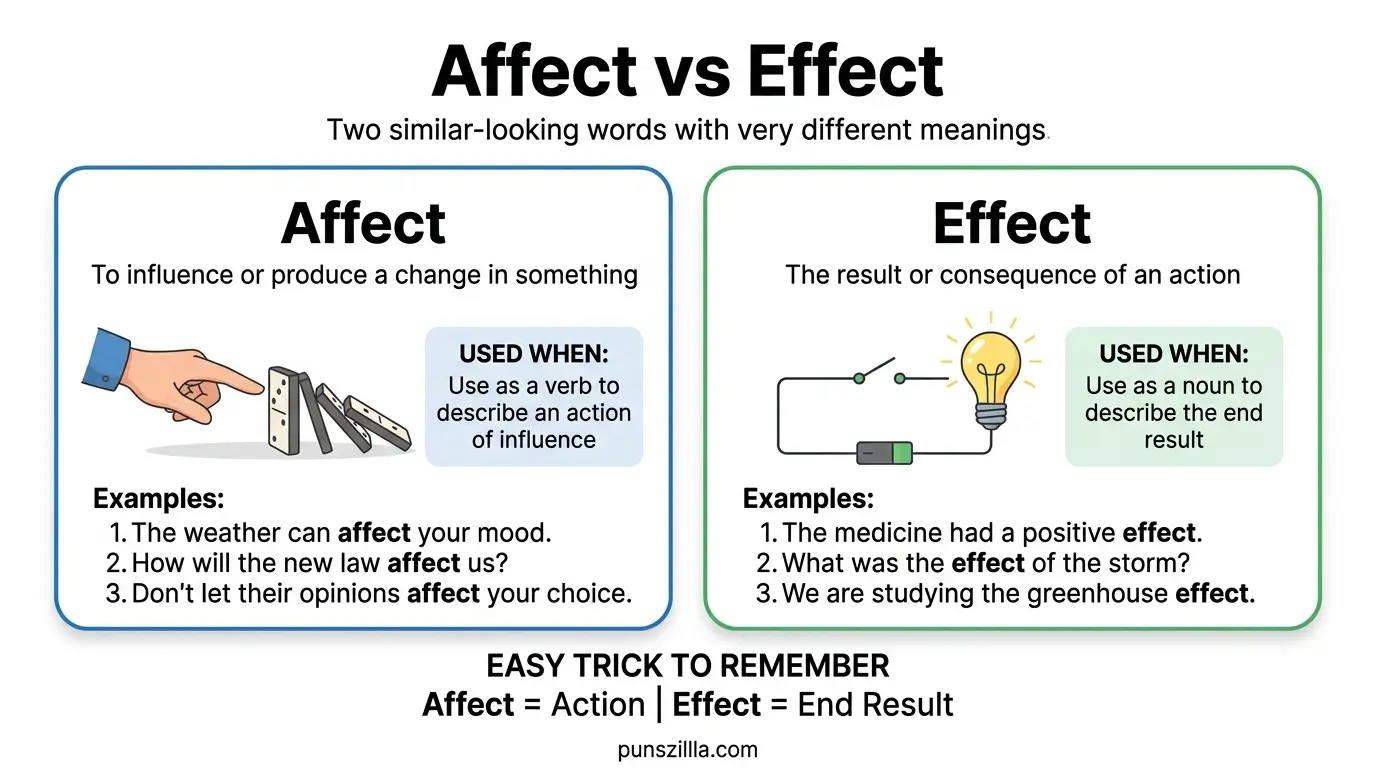
The confusion often comes from the words affect and effect, which have their own grammar rules. However, affective and effective are not simply adjective versions of those two words in the way many people assume.
The good news is that the difference is simple. Effective usually means “successful” or “producing the desired result.” Affective relates to feelings, emotions, or emotional expression.
For everyday writing, effective is usually the word you need. Affective is more specialized and appears often in psychology, education, and related fields. Once you understand this difference, choosing the right word becomes much easier.
Affective or Effective Quick Answer
Use effective when you mean successful, useful, or able to produce a desired result.
The new study method was effective.
This means the study method worked well.
Use affective when you mean related to emotions, feelings, moods, or emotional expression.
The patient showed affective symptoms.
Here, affective refers to emotions or mood.
Quick comparison
| Word | Meaning | Example |
| Effective | Produces a desired result | This is an effective solution. |
| Affective | Related to emotions or feelings | The patient has an affective disorder. |
A useful memory trick is:
Effective = gets a result.
Affective = relates to feelings.
If your sentence is not about emotions or psychology, effective is usually the correct choice.
The Origin of Affective or Effective
Although affective and effective look almost identical, they developed from different Latin roots and have different meanings.
Where does affective come from?
Affective comes through Medieval or Late Latin from affectus, a word connected with a state of mind, feeling, or disposition. Merriam-Webster records its first known English use in the 15th century.
The noun affect has a specialized meaning in psychology. It refers to an emotional state or the way emotions are expressed. Therefore, affective developed as an adjective connected with emotion.
For example:
The study examined affective responses to stress.
The word describes emotional responses.
Where does effective come from?
Effective comes from Middle English effectif, from Late Latin effectivus, meaning productive or effective. The Latin verb efficere meant “to accomplish,” “produce,” or “bring about.”
The word effect means a result or outcome. So effective developed the meaning of producing a result.
For example:
The new treatment was effective.
It produced the intended result.
Why do the spellings look so similar?
The similarity is partly historical. Both words developed through Latin and French forms, and both use the common adjective ending -ive. Their similar appearance does not mean they have the same meaning.
This is why remembering the meaning is more useful than simply looking at the spelling.
British English vs American English Spelling
There is no major British-versus-American spelling difference between affective and effective.
Both British English and American English normally spell the words the same way:
- affective
- effective
The main difference is usage and context, not spelling.
| Word | American English | British English | Meaning |
| Affective | affective | affective | Related to emotions |
| Effective | effective | effective | Producing a result |
| Affectively | affectively | affectively | In an emotional way |
| Effectively | effectively | effectively | Successfully or in practice |
For comparison, some English words do change spelling between American and British English, such as color/colour and organize/organise. Affective and effective do not normally follow this pattern.
So whether your audience is in the United States, United Kingdom, Canada, Australia, or another English-speaking region, the spelling remains affective and effective.
Which Spelling Should You Use?
The choice depends on meaning, not location.
For US audiences
Use effective when you mean successful or productive:
The new marketing strategy was effective.
Use affective when discussing emotions or psychological concepts:
The researchers measured affective responses.
For UK and Commonwealth audiences
The same rule applies:
The new policy is effective.
The study examined affective behavior.
British English does not require a different spelling for either word.
For global audiences
If you write for an international audience, effective will be the word you use most often.
Use affective only when the subject genuinely involves emotions, moods, or emotional responses.
This distinction is especially important in professional writing. Using affective when you mean effective can make a sentence look incorrect or confusing.
Common Mistakes with Affective or Effective
Mistake 1: Using affective to mean successful
Incorrect:
The new system was very affective.
Correct:
The new system was very effective.
The system produced a good result, so effective is correct.
Mistake 2: Thinking affective is the adjective form of the verb affect
This is a common misunderstanding.
Affective has a specialized meaning connected with affect as a noun, especially emotion or emotional expression. It does not simply mean “having an effect.”
Mistake 3: Using effective when talking about emotions
Incorrect:
The patient’s effective state changed during the interview.
Better:
The patient’s affective state changed during the interview.
Here, the sentence is about an emotional state, so affective is appropriate.
Mistake 4: Confusing effective with efficient
These words are related but not identical.
Effective means achieving the desired result.
Efficient means achieving a result with little waste of time, money, energy, or resources.
For example:
The treatment was effective.
The treatment was effective and efficient.
The first sentence says it worked. The second says it worked well while using resources efficiently.
Mistake 5: Assuming affective is always wrong
Affective is a real and correct English word. It is simply less common than effective. It is especially useful in psychology and other fields that discuss emotions.
Affective or Effective in Everyday Examples
Understanding real examples makes the difference easier to remember.
In emails
Effective:
The new meeting schedule will be effective from Monday.
Here, effective means the schedule will come into operation.
Affective:
The training included activities designed to improve affective skills.
Here, affective relates to feelings or emotional development.
In news writing
Effective:
The government introduced an effective plan to reduce traffic.
The plan is successful.
Affective:
Researchers examined the affective impact of the event on young people.
The focus is on emotional impact.
On social media
Effective:
This is an effective way to learn new vocabulary.
Affective:
Music can create strong affective responses.
The first concerns results. The second concerns emotions.
In formal writing
Effective:
The researchers found that the new method was highly effective.
Affective:
The researchers examined affective responses among participants.
Both words are correct because they describe different ideas.
In academic writing
Affective is common in academic fields involving psychology, education, and emotional development.
For example:
The study measured cognitive and affective factors.
Here, affective contrasts with cognitive, referring to emotional rather than thinking-related factors.
Affective or Effective Google Trends & Usage Data
Google Trends can help writers understand how people search for language questions. However, it is important to understand what Trends data means.
Google explains that Trends lets users compare search terms by location and time. It reports relative search interest, rather than giving a simple count of all Google searches.
Google also notes that spelling variations and related terms are not automatically combined when searching as separate terms.
For affective vs. effective, dictionary and grammar references consistently show that effective is much more common in general English, while affective is more specialized.
This difference makes sense because effective is used in everyday topics such as:
- effective communication
- effective strategy
- effective treatment
- effective method
- effective solution
- effective leadership
Affective appears more often in specialized contexts such as:
- affective disorder
- affective response
- affective behavior
- affective state
- affective development
- affective science
Google Trends also allows comparisons by country, which can help publishers investigate regional search behavior.
For SEO, this means a page targeting “affective or effective” should not treat the two words as equally common. The article should answer the main confusion quickly, then explain the specialized use of affective.
Affective vs. Effective: Comparison Table
| Feature | Affective | Effective |
| Main meaning | Related to emotions | Producing a desired result |
| Commonness | Less common | Much more common |
| Main fields | Psychology, education, emotional studies | Everyday, business, academic, professional writing |
| Related noun | Affect | Effect |
| Example | Affective response | Effective solution |
| Refers to feelings? | Yes | Usually no |
| Means successful? | No | Yes |
| British spelling | affective | effective |
| American spelling | affective | effective |
FAQs About Affective or Effective
Is it affective or effective?
Usually, the correct word is effective when you mean successful, useful, or able to produce a desired result.
Use affective when you are talking about emotions, feelings, moods, or emotional expression.
What is the difference between affective and effective?
Effective means producing a desired result. Affective means relating to emotions or feelings.
The medicine was effective.
The patient showed affective symptoms.
Is affective a real word?
Yes. Affective is a standard English adjective. It is commonly used in psychology and related fields to describe emotions, moods, or emotional expression.
Is affective the opposite of effective?
No. They are not opposites. They describe different ideas. Affective relates to emotions, while effective usually describes something that produces a result.
Is affective a synonym for emotional?
In many contexts, yes. Affective can mean related to emotions or feelings. However, it is more specialized and is especially common in psychology and academic writing.
Which word is more common: affective or effective?
Effective is much more common in general English. Affective has a narrower meaning and is more common in specialized fields involving emotions.
Should I use affective or effective in professional writing?
Use effective when you mean successful or productive. Use affective only when the subject concerns emotions, mood, or emotional responses.
Conclusion
The difference between affective and effective is easier than it first appears. Effective is the common word.
It means successful, useful, or able to produce a desired result. For example, an effective plan is one that works.
Affective is more specialized. It relates to emotions, feelings, moods, or emotional expression. You will often see it in psychology, education, and academic writing.
The spelling is the same in both British and American English, so this is not really a spelling problem. It is a meaning and word-choice problem.
When you are unsure, ask what your sentence is describing. If you mean results, success, or something that works, choose effective. If you mean feelings, emotions, or mood, choose affective.
For most everyday writing, effective will be the correct choice. But do not avoid affective when your subject genuinely concerns emotions. Both words are correct; they simply serve different purposes.