
Allusion or Illusion? Learn How to Use Each Word Correctly
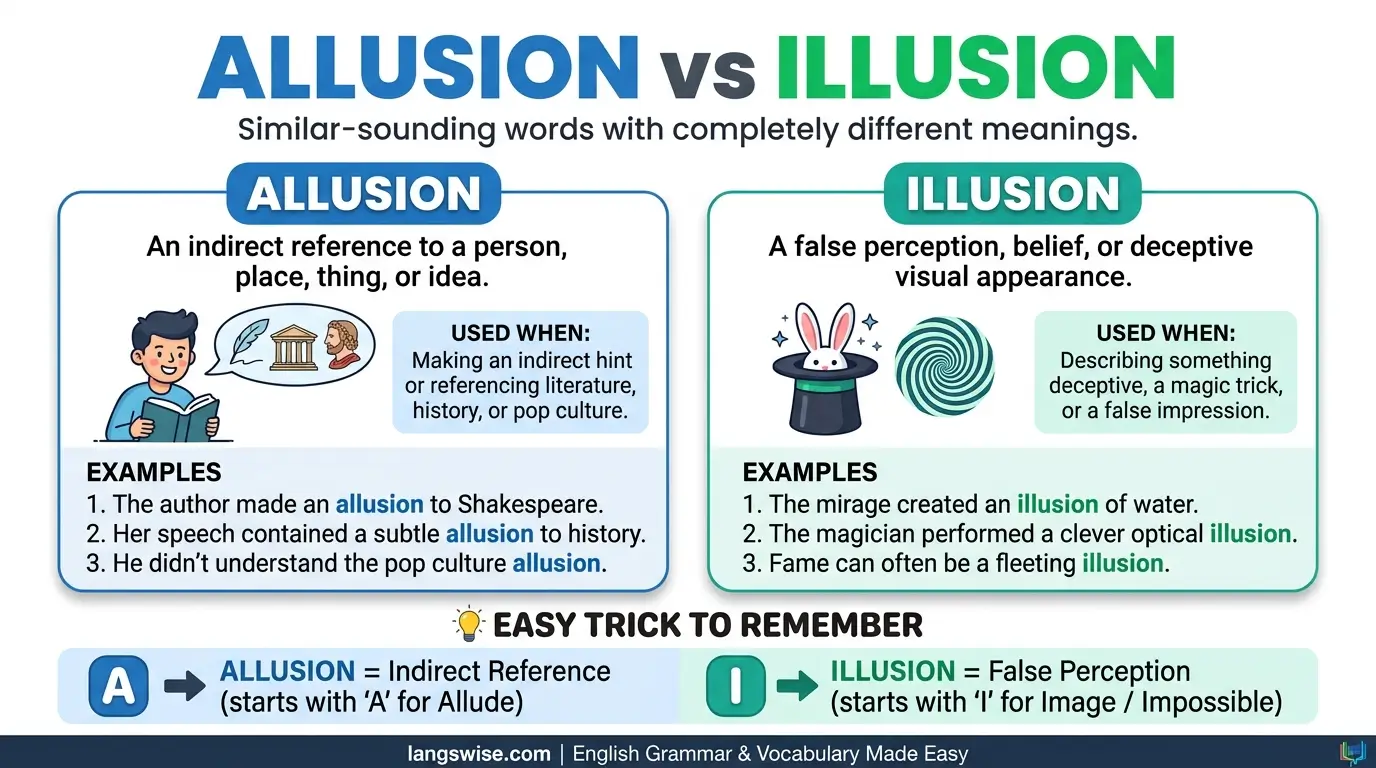
Allusion means an indirect reference to something, while illusion means a false appearance or trick. Both spellings are correct but have different meanings.
Have you ever wondered whether to write allusion or illusion? These two words look and sound almost the same, but they have very different meanings.
Choosing the wrong word can change the meaning of your sentence and confuse your readers. This is why students, writers, and English learners often search for the correct spelling.
The word allusion refers to an indirect mention of a person, place, event, or idea. In contrast, illusion means something that tricks the mind or creates a false impression. Both words are correct English words, but they cannot replace each other.
Understanding the difference is important for clear writing. You may need allusion when discussing books, poems, or history. You need illusion when talking about magic, visual tricks, or false beliefs.
In this guide, you will learn their meanings, origins, spelling differences, and everyday uses. You will also find simple examples to help you choose the right word every time.
Allusion or Illusion – Quick Answer
Allusion means an indirect reference to something. Illusion means something that looks real but is not real or creates a false impression. Both spellings are correct, but their meanings are different.
- Allusion: The poem makes an allusion to Greek mythology.
- Illusion: The magician created an amazing illusion.
Remember: Allusion is about a reference, while illusion is about something that deceives the senses or mind.
The Origin of Allusion or Illusion
The words allusion and illusion come from Latin. They have different word histories, which explain why they have different spellings and meanings. Both entered English through French.
Allusion comes from the Latin word alludere, meaning to play with or refer to something indirectly. It later developed into a word for a hidden or indirect reference in speech and writing.
Illusion comes from the Latin word illusio, meaning a mocking, deception, or trick. Today, it describes something that creates a false impression or makes something appear different from reality.
Their similar sounds can cause confusion, but their meanings remain separate.
British English vs American English Spelling
There is no spelling difference between British and American English for these two words. Both countries use allusion and illusion with the same spelling and meaning.
Unlike words such as colour and color, these words do not change based on regional spelling rules. Their correct use depends on the meaning of the sentence.
| Word | British English | American English | Meaning |
|---|---|---|---|
| Allusion | Allusion | Allusion | Indirect reference |
| Illusion | Illusion | Illusion | False appearance or trick |
Examples:
- British English: The author included an allusion to Shakespeare.
- American English: The author included an allusion to Shakespeare.
- British English: The mirror creates an illusion of space.
- American English: The mirror creates an illusion of space.
The spelling stays the same in both varieties of English.
Which Spelling Should You Use?
Your choice should depend on what you want to say, not where your readers live. Both words are accepted in American, British, and Commonwealth English.
For American English: Use allusion for an indirect reference and illusion for a false appearance. Both spellings are standard in the United States.
For British and Commonwealth English: Follow the same rule. Countries such as the UK, Canada, Australia, and Pakistan use both spellings in the same way.
For global writing: Choose the word that matches your meaning. If you mean a reference, use allusion. If you mean a trick or false impression, use illusion.
Common Mistakes with Allusion or Illusion
Many writers mix up these words because they sound similar. However, using one in place of the other can make a sentence incorrect or confusing.
Here are some common mistakes and their corrections:
| Incorrect Sentence | Correct Sentence | Reason |
|---|---|---|
| The story contains an illusion to history. | The story contains an allusion to history. | An indirect reference is an allusion. |
| The magician performed an allusion. | The magician performed an illusion. | A magic trick creates an illusion. |
| It was only an allusion of reality. | It was only an illusion of reality. | A false appearance is an illusion. |
| The poem makes an illusion to love. | The poem makes an allusion to love. | A reference is an allusion. |
Helpful tip: Remember that allusion starts with “all,” while illusion starts with “ill.” Connect allusion with an indirect reference and illusion with an unreal appearance.
Allusion or Illusion in Everyday Examples
Both words appear in everyday conversations and different types of writing. Knowing their correct use helps you write clear emails, social media posts, news stories, and formal documents.
1. In Emails
Use allusion when referring indirectly to a person, event, or idea. Use illusion when describing a false impression.
- Allusion: Your email includes an allusion to our previous discussion.
- Illusion: The report gives the illusion that the project is complete.
2. In News
News writers use allusion when discussing indirect references in speeches or public statements. They use illusion when describing misleading appearances or false beliefs.
- Allusion: The speaker made an allusion to an earlier political event.
- Illusion: The new figures created an illusion of economic growth.
3. On Social Media
Both words can appear in posts, comments, and captions. Their meanings depend on the message.
- Allusion: This movie contains an allusion to a famous fairy tale.
- Illusion: Social media can create an illusion of a perfect life.
4. In Formal Writing
In academic and professional writing, allusion often appears in literary analysis. Illusion is common in psychology, art, philosophy, and discussions about perception.
- Allusion: The writer uses a biblical allusion to support the main theme.
- Illusion: The study examines the illusion of control.
Allusion or Illusion – Google Trends & Usage Data
Both allusion and illusion are established English words. However, their search interest can differ because people use them in different situations.
The word illusion appears in discussions about magic, art, psychology, and visual effects. It also appears in entertainment, music, and everyday conversations about false impressions.
The word allusion is more closely linked to literature, education, poetry, and academic writing. Students often search for its meaning when studying books, essays, and literary devices.
Search interest may vary across the United States, the United Kingdom, Canada, Australia, and other English-speaking regions. However, there is no reliable basis here for claiming an exact country ranking or a fixed search-volume difference.
Google Trends measures relative search interest over time, not the total number of searches. You can compare both terms by country and date range using Google Trends.
Allusion vs Illusion – Comparison Table
The easiest way to understand these words is to compare their meanings, uses, and examples side by side.
| Feature | Allusion | Illusion |
|---|---|---|
| Meaning | Indirect reference | False appearance |
| Word type | Noun | Noun |
| Main use | Literature and communication | Magic, art, and perception |
| Related idea | Reference | Deception |
| Example | An allusion to history | An optical illusion |
| Common phrase | Literary allusion | Grand illusion |
| Correct spelling | Allusion | Illusion |
Both words are nouns, but they describe different ideas. Always check the meaning before choosing one.
Frequently Asked Questions (FAQs)
1. What is the difference between allusion and illusion?
Allusion means an indirect reference to a person, place, event, or idea. Illusion means something that creates a false appearance or tricks the mind. Both words are correct but have different meanings.
2. Is allusion or illusion the correct spelling?
Both are correct English spellings. Use allusion for an indirect reference and illusion for a false appearance or trick. Your choice depends on the meaning you want to express.
3. What is an example of allusion?
An example is: “The novel makes an allusion to Romeo and Juliet.” It means the novel indirectly refers to the famous Shakespearean story. The reference may not explain the story directly.
4. What is an example of illusion?
An example is: “The magician created an illusion with mirrors.” It means the magician made something appear different from reality. Optical illusions also create misleading visual effects.
5. Are allusion and illusion pronounced the same?
No, their pronunciations are slightly different. Allusion is commonly pronounced uh-LOO-zhuhn, while illusion is pronounced ih-LOO-zhuhn. Their similar sounds can make them easy to confuse.
6. Do British and American English use different spellings?
No, both British and American English use allusion and illusion. There is no regional spelling change for these words. Their meanings and standard spellings remain the same.
7. What is an optical illusion?
An optical illusion is an image or visual effect that makes your eyes or brain interpret something differently from reality. It may make objects appear larger, smaller, or different in shape. Optical illusions are often used in art and visual puzzles.
Conclusion
Understanding the difference between allusion or illusion is important for clear and correct English writing. Although these words look and sound similar, they have different meanings.
Allusion refers to an indirect mention of a person, place, event, or idea. Illusion describes something that creates a false appearance or tricks the senses.
Use allusion when writing about literature, history, poetry, or references to other works. Choose illusion when discussing magic tricks, visual effects, false beliefs, or misleading appearances.
Remember that neither word is a spelling mistake. Both are correct and widely accepted in British and American English.
The easiest way to remember the difference is to connect allusion with reference and illusion with deception. Also, check the meaning of your sentence before choosing a word.
With this simple rule, you can avoid common mistakes and use both words confidently in emails, essays, articles, and professional writing.