
Sherbet or Sherbert: Which Spelling Is Correct?
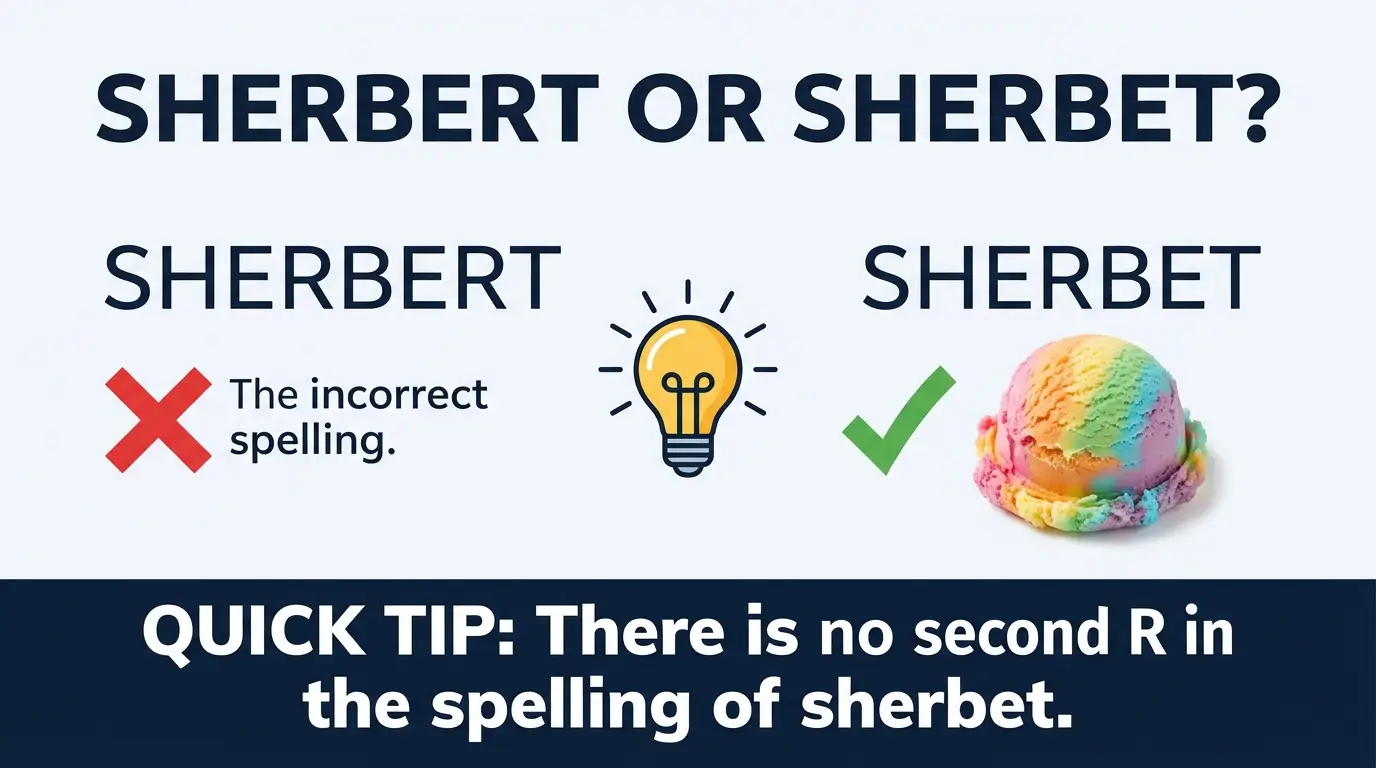
Sherbet is the correct and standard spelling. Sherbert is a less common variant, but sherbet is best for formal and everyday writing.
Have you ever written sherbet and wondered if it should have an extra “r” sherbert? You are not alone. These two spellings are often confused because many people pronounce the word with an extra “r” sound. That makes sherbert look natural, even though sherbet is the usual spelling.
The good news is simple: sherbet is the standard and preferred spelling. Sherbert is also found in dictionaries as a less common variant, especially in American English. Merriam-Webster lists sherbert as a variant of sherbet, but notes that it is less common.
The word can also mean slightly different things depending on where you live. In the United States, sherbet usually means a frozen fruit dessert. In Britain, sherbet can also mean a sweet, fizzy powder.
So, which spelling should you use? Let’s look at the history, regional differences, common mistakes, and real-world examples.
Sherbet or Sherbert Quick Answer
Sherbet is the standard spelling. Sherbert is a less common variant spelling.
- Preferred: sherbet
- Less common variant: sherbert
- Pronunciation: usually “SHUR-bit”
- US meaning: a frozen fruit dessert containing some dairy or other ingredients
- UK meaning: often a sweet, fizzy powder or confection
Example:
We had orange sherbet after dinner.
You may see sherbert in casual writing, but sherbet is the safer choice for school, work, websites, and formal writing. Merriam-Webster recognizes sherbert as a variant, so it is not simply an invented word.
Sherbet vs. Sherbert at a Glance
| Spelling | Status | Common Use | Best Choice |
|---|---|---|---|
| sherbet | Standard | Frozen dessert; UK sweet powder | Yes |
| sherbert | Less common variant | Mainly US usage | Usually no |
The Origin of Sherbet or Sherbert
The history of sherbet goes back hundreds of years.
The English word came through Turkish şerbet and Persian sharbat, from Arabic sharba, meaning “a drink.” The Arabic root is connected with the verb meaning “to drink.” Merriam-Webster gives the first known English use of sherbet as 1603.
Originally, sherbet was not the frozen dessert many Americans know today. It referred to a cold drink made from sweetened fruit juice and water. It could be chilled with snow or ice. Over time, the word developed new meanings in English.
The extra r in sherbert is linked to pronunciation. English speakers often pronounced the word as if it contained an extra “r” sound. That pronunciation later influenced spelling.
Interestingly, sherbert has existed for centuries. Merriam-Webster notes that the spelling appeared early and later became a recognized, though much less common, variant.
British English vs American English Spelling
The spelling itself is mostly the same in British and American English: sherbet is the preferred form.
The bigger difference is meaning.
In American English, sherbet usually describes a frozen dessert made with fruit juice or purée, sugar, and a small amount of milk, cream, or another ingredient. In the UK, sherbet commonly refers to a sweet, slightly fizzy powder that can be eaten or mixed into a drink.
| Feature | American English | British English |
|---|---|---|
| Preferred spelling | sherbet | sherbet |
| Variant | sherbert | sherbert may occur |
| Common dessert meaning | Yes | Yes, but less central |
| Fizzy powder meaning | Less common | Very common |
| Formal writing | Use sherbet | Use sherbet |
So, if you are writing for a British audience, remember that sherbet may refer to a sweet powder rather than the frozen dessert you expect.
Which Spelling Should You Use?
The safest choice is sherbet.
For American English
Use sherbet in schoolwork, business writing, articles, recipes, and professional communication.
My favorite dessert is raspberry sherbet.
Although sherbert appears in American dictionaries, it is less common.
For British English
Use sherbet as well. Just remember that the word can have a different meaning.
She bought a packet of lemon sherbet.
Here, a British reader may understand this as a fizzy sweet powder.
For Global English
If your audience is international, sherbet is the best choice. It is the standard form and is widely recognized.
Common Mistakes with Sherbet or Sherbert
The most common mistake is adding an unnecessary r.
Mistake 1: Writing “sherbert” as the standard form
Less preferred:
I bought strawberry sherbert.
Preferred:
I bought strawberry sherbet.
Mistake 2: Assuming sherbert is always “wrong”
This is not quite accurate. Major dictionaries recognize sherbert as a variant. It is simply much less common than sherbet.
Mistake 3: Confusing sherbet with sorbet
Sherbet and sorbet are not always the same.
In modern American usage, sherbet usually contains some dairy or another ingredient, while sorbet is generally dairy-free.
Mistake 4: Assuming pronunciation determines spelling
Some people pronounce sherbet as “SHER-bert.” That does not mean the spelling needs an extra r.
Remember:
sher-bet → sherbet
Sherbet or Sherbert in Everyday Examples
In Emails
We will serve lemon sherbet after the meal.
For professional emails, sherbet is the better choice.
In News Writing
The restaurant introduced three new sherbet flavors for summer.
News and formal publications normally favor the standard spelling.
On Social Media
Mango sherbet is perfect for a hot afternoon!
You may also see sherbert in social posts because informal writing often follows pronunciation.
In Formal Writing
The study examined consumer preferences for fruit-based frozen desserts, including sherbet.
Use sherbet in academic and professional writing.
In Casual Conversation
Do you want some orange sherbet?
Either spelling may appear when people write down the word they hear, but sherbet remains the standard choice.
Sherbet or Sherbert Google Trends & Usage Data
Search interest can change over time, but the spelling difference is clear in dictionary and language-use data: sherbet is much more established and commonly used than sherbert.
Merriam-Webster calls sherbert a “less commonly” used variant, while Dictionary.com also lists sherbert as an alternative form.
Usage also changes by region:
- United States: sherbet is the normal spelling for the frozen dessert.
- United Kingdom: sherbet is common, but the word often refers to fizzy sweet powder.
- Australia: dictionaries record additional regional meanings for sherbet, including slang for beer.
- International English: sherbet is generally the safest spelling.
Google search interest can also vary with season. Searches for the word tend to be more relevant during warmer months because sherbet is commonly associated with cold desserts and summer foods.
The key takeaway is not to chase small changes in search volume. For normal writing and SEO content, sherbet is the stronger spelling because it is the standard form.
Sherbet vs Sherbert: Comparison Table
| Point | Sherbet | Sherbert |
|---|---|---|
| Standard spelling | Yes | No |
| Dictionary-listed | Yes | Yes, as a variant |
| More common | Yes | No |
| Extra “r” | No | Yes |
| Common in US speech | Yes | Also heard |
| Best for formal writing | Yes | No |
| Frozen dessert | Yes | Yes, as a variant |
| UK usage | Yes | Less preferred |
FAQs About Sherbet or Sherbert
Is sherbet or sherbert correct?
Sherbet is the standard spelling, while sherbert is a less common variant recognized by several dictionaries.
Is sherbert a real word?
Yes. Sherbert is a recognized variant spelling of sherbet, although it is much less common.
Why do people say sherbert?
Many speakers add an r sound when pronouncing sherbet. That pronunciation likely helped make the spelling sherbert common.
Should I write sherbet in formal writing?
Yes. Sherbet is the safest and most widely accepted spelling for formal, academic, and professional writing.
What is the difference between sherbet and sorbet?
In common American usage, sherbet usually contains some milk, cream, or another ingredient, while sorbet is generally dairy-free.
Is sherbet a British word?
Yes. British English uses sherbet, but it often means a sweet, fizzy powder rather than the frozen dessert commonly meant in American English.
Which spelling should I use: sherbet or sherbert?
Use sherbet in almost every situation. It is the standard form and works well for both American and British English.
Conclusion
When choosing between sherbet or sherbert, the simple answer is sherbet. It is the standard spelling and the form you should normally use in professional, academic, website, and everyday writing.
Sherbert is not simply a random spelling mistake. It is a recognized variant that developed from the way some people pronounce the word. However, it is much less common than sherbet, so it is not the best choice when you want standard English.
There is also an important regional difference in meaning. In American English, sherbet usually means a frozen fruit dessert. In British English, it can also mean a fizzy sweet powder.
So, if you are unsure, remember one simple rule: choose “sherbet” and leave out the extra “r.” That spelling is clear, standard, and understood by English speakers around the world.